

Ask most people to name one Mongolian person and you will hear the same answer almost every time: Genghis Khan. That single point of reference says a lot about why so many parents, writers, and curious readers end up searching for Mongolian names in the first place. There is a whole naming culture behind that one famous name, built on nature, sky, steppe, and steel, and it goes far deeper than the handful of names most people already know.
This guide pulls together more than 480 Mongolian names spanning ancient history, the imperial era, modern Mongolia, and Inner Mongolia, along with real meanings, naming customs, and the kind of practical context that most name lists skip entirely. Whether you are naming a child, a character, or just curious about Mongolian names and what they represent, this should give you a genuinely useful starting point.
Also Read This: Famous Gun Nicknames: History to Modern Slang (2026 Guide)
Why Naming Mongolian Is So Special
Mongolian names work differently than names in most naming traditions readers are used to. Rather than picking a single word from a fixed list of approved names, Mongolian names are traditionally built by combining two or more meaningful root words, so a name is almost always a small phrase rather than an arbitrary label. Altan means golden, chimeg means ornament, and put together Altanchimeg becomes “golden ornament,” a genuinely common and well loved name.
There is also a widely documented naming custom worth knowing before you dive into these Mongolian names: some Mongolian parents historically gave children names with unattractive or unpleasant meanings on purpose, as a way of misleading evil spirits that might otherwise try to take a beloved child. That single tradition explains why you will occasionally come across older Mongolian names that sound harsh or plain next to the golden, radiant names that dominate most lists.
Mongolian names also carry a layer of modern political history that most naming guides leave out. Surnames were banned in Mongolia starting in 1924 under Communist rule, partly to make it harder for aristocratic families descended from Genghis Khan to organize resistance, so generations of Mongolians used only a single given name with their father’s name for identification.
Mongolia legally reintroduced clan surnames, known as ovog, starting in 1997 and more seriously after 2000, giving families the chance to reclaim or choose a lineage name for the first time in decades. Many people chose Borjigin, the historic clan name of Genghis Khan, while others picked an ancestral village name or simply passed down their own given name as a new surname.
Also Read This: Best Greninja Nicknames: 300+ Awesome Ideas
Ancient Mongolian Names
These Mongolian names come directly from the era of the Mongol Empire and the centuries before it, drawn from documented historical figures rather than invented approximations.
Temüjin, Chinggis Khaan, Börte, Hö’elün, Yesugei, Jamukha, Subutai, Jebe, Jochi, Chagatai, Ögedei, Tolui, Möngke, Kublai, Hulagu, Batu, Sorghaghtani Beki, Töregene, Chabi, Guyuk, Ariq Böke, Alakhai Bekhi, Checheikhen.
Temüjin, the birth name of Genghis Khan, is often connected to the Mongolian word for iron, which would make it something close to “blacksmith” or “man of iron,” though scholars are not entirely settled on the exact origin. His title, Chinggis Khaan, is still debated among historians when it comes to precise meaning, but it has long been associated with strength, universal rule, and fierce authority.
Mongolian Names Female
Female Mongolian names lean heavily on nature, light, and beauty, which is one of the more consistent patterns across the entire naming tradition.
Sarangerel, Naran, Bolormaa, Sarnai, Solongo, Tsetseg, Altanchimeg, Altansarnai, Altansetseg, Udval, Tuyaa, Oyungerel, Nomin, Tungalag, Uyanga, Delgermaa, Ariunaa, Bayarmaa, Enkhtuya, Gerelmaa, Odgerel, Tsetsegmaa, Undarmaa, Khulan, Erdenechimeg, Chimgee, Narantsetseg, Sarnaiya, Oyuunaa, Bolortuya, Enkhjin, Tuguldur Tsetseg, Ganchimeg, Tsolmon, Dulmaa.
Sarangerel translates to “moonlight,” Naran means “sun,” and Solongo means “rainbow,” which together capture how often Mongolian girl names reach for something bright or luminous in the sky. Tsolmon, used for both genders, refers specifically to Venus or the morning star.
Popular Mongolian Names
If you want Mongolian names that are genuinely common rather than rare or invented, these show up again and again across generations.
Erdene, Baatar, Altan, Naran, Ganbold, Saruul, Bat, Temuulen, Bilguun, Enkhbayar, Munkhbat, Tsend, Oyun, Zorig, Ganzorig, Chuluun, Dorj, Damba, Gantulga, Bold, Batbayar, Bat-Erdene, Sukhbaatar, Munkhjin, Amarbat, Tergel, Otgonbayar, Nyamdorj, Batzorig.
Erdene means “treasure” or “jewel,” Baatar means “hero,” and Bat means “firm” or “stable,” and all three appear constantly, both on their own and combined into longer compound names like Bat-Erdene or Ganbold.
Also Read This: Best Victoria Nicknames: Vicky, Tori & 250+ Fun Ideas
Unique Names for Mongolian
For something less common than the names above, these Mongolian names lean on rarer word combinations while still following authentic naming patterns.
Tumenjargal, Orgiltuvshin, Tuvshinbayar, Delgerjin, Zorigtai, Altai, Naraa, Munkh, Temur, Saruul, Khulan, Chono, Tuvshinar, Sarnaiya, Arigun, Ganchimeg, Bilegt, Erdenetuya, Enkhtuvshin, Gantumur, Tumurbaatar, Batsaikhan, Odbayar, Tergel, Oyunbileg.
Chono means “wolf,” a name tied closely to Mongolian identity since the wolf appears throughout Mongol origin stories and folklore. Tuvshinar roughly translates to “calm sun,” a good example of how two gentle concepts combine into something more evocative.
Mongolian Names for Girl & Boys
Splitting Mongolian names by gender makes it easier to narrow down a shortlist quickly.
Mongolian Names for Girls: Sarangerel, Naran, Bolormaa, Sarnai, Solongo, Tsetseg, Udval, Tuyaa, Oyungerel, Nomin, Uyanga, Delgermaa, Ariunaa, Bayarmaa, Enkhtuya, Khulan, Dulmaa, Tsolmon, Narantsetseg, Bolortuya.
Mongolian Names for Boys: Erdene, Baatar, Altan, Ganbold, Saruul, Bat, Temuulen, Bilguun, Enkhbayar, Munkhbat, Zorig, Ganzorig, Chuluun, Dorj, Bold, Batbayar, Sukhbaatar, Temur, Chono, Gantumur.
Also Read This: 300+ Best Megan Nicknames: Cute & Unique Picks
Famous Mongolian Names
A handful of Mongolian names belong to real historical and modern figures, and knowing them gives useful context for how naming patterns have carried through the centuries. Genghis Khan, born Temüjin and later given the title Chinggis Khaan, remains the most recognized Mongolian name in the world. His sons Jochi, Chagatai, Ögedei, and Tolui each ruled a portion of the empire, and his grandsons Möngke, Kublai, and Hulagu extended Mongol rule across Asia and into the Middle East. More recently, Tsakhiagiin Elbegdorj served as Mongolia’s president in the 2010s. These names show a consistent thread: short, meaningful roots that have carried across nearly a thousand years without losing their cultural weight.
Cool Names for Mongolian
These Mongolian names carry a stronger, harder edge, useful for anyone wanting something bold rather than soft or floral.
Ganzorig, Sukhbaatar, Batsaikhan, Tumurbaatar, Chono, Batbold, Gantulga, Zorigtbaatar, Munkhbaatar, Otgonbaatar, Erdenebaatar, Batmunkh, Gansukh, Nyamjav, Dashzeveg, Bataar, Khasbaatar, Uranchimeg, Tsengel, Batkhuyag.
Also Read This: Scarlett Nicknames List: Scar,Lettie & 250+ More You’ll Love
Mongolian Names Male
More Mongolian names for boys and men, expanding on the shorter list above.
Bat, Bold, Baatar, Bilguun, Chuluun, Damba, Dorj, Enkhbayar, Ganbaatar, Gantulga, Ganzorig, Munkhbat, Munkhjin, Naranbaatar, Nyamdorj, Otgonbayar, Saruul, Sukhbaatar, Temuulen, Tumurbaatar, Tsend, Zorig, Batbayar, Batzorig, Erdenebat, Gansukh, Khasbaatar, Odbayar, Tuguldur, Ulaanbaatar.
Mongolian Names Reddit
When Mongolian names come up in baby name forums and worldbuilding communities online, the requests tend to fall into two camps: people who want something short and easy for non-Mongolian speakers to pronounce, and people specifically looking for names with real documented meanings rather than invented approximations. Names that satisfy both groups well include Bat, Bold, Naran, Sarnai, Erdene, Tuyaa, Chono, Altan, Oyun, and Tsolmon, all of which are short, phonetically simple, and carry meanings that are easy to explain in a single sentence.
Also Read This: 790+ Funny Insulting Names for Guys: Best List
Mongolian Baby Names
For parents specifically naming a newborn, these Mongolian names balance meaning with everyday usability.
Naran, Sarnai, Erdene, Tuyaa, Altan, Bat, Bold, Oyun, Nomin, Tsetseg, Enkhbayar, Bayarmaa, Delgermaa, Munkhjin, Tergel, Gerelmaa, Odgerel, Ariunaa, Khulan, Sarangerel, Chuluun, Solongo, Dulmaa, Bilguun.
Mongolian Names and Meanings
Knowing the meaning behind a name adds a layer that a plain list can’t. Here are several Mongolian names with their documented meanings.
Altan means “golden,” reflected in compound names like Altanchimeg and Altansarnai. Naran means “sun,” a name and root word used constantly across Mongolian naming traditions. Sarnai translates to “rose.” Erdene means “treasure” or “jewel.” Baatar means “hero,” the same word that appears in Sukhbaatar, the name of the revolutionary leader and the city named after him. Munkh means “eternal.” Chono means “wolf.” Tuyaa means “ray,” as in a ray of light. Tsolmon refers to Venus or the morning star. Batu, and the shortened Bat, mean “firm” or “stable.” Oyun refers to “mind” or “wisdom.”
Mongolian Names for Horse
This section deserves an honest answer rather than an invented list, because Mongolian horse culture works differently than most readers expect. Traditionally, Mongolian herders do not give their horses individual names at all. Horses are identified instead by color, markings, scars, and brands, and the Mongolian language reportedly includes several hundred words describing coat colors and patterns alone. Families sometimes designate one sacred horse from the herd, marked with a blue ceremonial scarf and rarely ridden except on special occasions, but even that horse is identified by its role rather than a personal name.
If you are naming a horse in fiction, a game, or simply want a Mongolian-inspired name for a real horse outside of Mongolian tradition, borrowing strength and nature-based words works well: Chono (wolf), Salhi (wind), Khurd (speed), Altan (golden), Tsagaan (white), Khar (black), or Bataar (hero) all carry the right tone even though they are not traditional individual horse names.
Common Mongolian Names
These Mongolian names appear across generations and regions consistently enough to be considered everyday, common choices rather than rare or trend driven ones.
Bat, Bold, Dorj, Damba, Sukhbaatar, Tsend, Oyun, Naran, Sarnai, Altan, Erdene, Chuluun, Zorig, Bayar, Gantulga, Munkhbat, Batbayar, Enkhbayar, Nyambayar, Tumen.
Also Read This: 730+ Drake Nicknames: Cool, Unique & Funny Fan Ideas
Mongolian Surnames
Because surnames were banned in Mongolia from 1924 until the mid-1990s, the concept works differently here than in most naming cultures. Today, Mongolians use a clan or lineage name called an ovog on official documents, alongside a patronymic built from the father’s given name, followed by their own given name. Common clan names people have adopted since the 1997 restoration include Borjigin (the historic clan of Genghis Khan), Besud, and Jalair, along with surnames drawn from ancestral village names. Everyday Mongolian surnames and patronymics you will encounter include Ayuush, Badarch, Damba, Zorigtyn, Sansar, Dorjpalam, and Tserendorj.
Short Mongolian Names
For anyone who wants something brief and easy to say, these short Mongolian names get straight to the point.
Bat, Bold, Od, Gal, Tal, Sar, Naran, Tuyaa, Erdene, Zorig, Oyun, Bayar, Dorj, Khulan, Tsend, Bataar, Chono, Sukhee, Nomin, Baatar.
Modern Mongolian Names
Modern Mongolian names often blend traditional roots with a slightly shorter, more casual feel, reflecting Mongolia’s fast urbanizing younger generation.
Temuulen, Bilguun, Munkhjin, Anujin, Tergel, Achit, Suvd, Erchim, Solongo, Uyanga, Tselmeg, Otgonbayar, Enkhjin, Ganchimeg, Bolor, Tuguldur, Erdenetuya, Odval, Khongorzul, Nandin.
Best Names for Mongolian
If you only want a short, dependable list of Mongolian names to choose from, these tend to work well across nearly any context.
Erdene, Baatar, Naran, Altan, Bat, Sarnai, Tuyaa, Oyun, Munkh, Chono, Sukhbaatar, Bolor, Delgermaa, Ganzorig, Khulan, Tsetseg, Bayarmaa, Zorig, Dorj, Bilguun.
Traditional Mongolian Names
These Mongolian names reflect long standing naming customs rooted in nature, virtue, and Buddhist influence that arrived from Tibet starting in the sixteenth century.
Dorj (from the Tibetan word for “vajra” or thunderbolt), Lkhagvasuren, Damdinsuren, Choijinlkhamyn, Yumjaagiin, Punsalmaagiin, Tserendorj, Batmonkh, Gombosuren, Rentsendorj, Chultemsuren, Namsrai, Choijin, Danzan, Sanjaa.
Medieval Mongolian Names
Names from the wider Mongol Empire period, including the Yuan Dynasty era that followed Kublai Khan’s conquest of China, show how far Mongolian naming influence traveled.
Kublai, Temür Khan, Ayurbarwada, Toghon Temür, Shidebala, Yesün Temür, Tugh Temür, Rinchinbal, Bayan, Ashiq Temür, El Temür, Toqto’a.
A-Z Names for Mongolian
A quick alphabetical spread of Mongolian names, one or more per letter.
Altan, Bat, Chono, Damba, Erdene, Ganbold, Hulan (Khulan), Ihbayar, Jargal, Khasbaatar, Lkhagvasuren, Munkh, Naran, Oyun, Purev, Qarshi (regional variant), Rentsendorj, Sarnai, Tuyaa, Undarmaa, Vandan, Wangchug (Tibetan-influenced), Yesui, Zorig.
Nomadic Steppe and Horse-Warrior Mongolian Names
These Mongolian names lean directly into the nomadic, horse-centered identity that defines much of Mongolian history and culture.
Baatar, Mergen (meaning “marksman” or “wise archer”), Batsaikhan, Chuluun, Khurd, Zorigt, Tumurbaatar, Ganzorig, Munkhbaatar, Subutai, Jebe, Sukhbaatar, Batkhuyag, Gansukh, Dayan, Toregene, Otgonbaatar, Khasbaatar, Erdenebaatar, Nergui.
Grand Khan and Imperial Dynasty Mongolian Names
Titles and names tied directly to the Mongol Empire’s ruling line, useful for anyone naming a character or exploring the imperial period specifically.
Chinggis Khaan, Ögedei Khan, Güyük Khan, Möngke Khan, Kublai Khan, Batu Khan, Hulagu Khan, Tolui, Jochi, Chagatai Khan, Sorghaghtani Beki, Töregene Khatun, Chabi Khatun, Ariq Böke, Berke Khan.
Celestial Nature and Mountain-Inspired Mongolian Names
Mongolia’s landscape, from the Altai mountains to the Gobi desert, shows up constantly in names tied to sky and terrain.
Altai, Khangai, Tenger (sky or heaven), Gobi, Selenge, Onon (the river near Genghis Khan’s traditional birthplace), Burkhan Khaldun, Uul (mountain), Khukh Tenger (blue sky), Naran, Sarnai, Solongo, Tungalag, Bayan-Ulgii, Khuvsgul, Terelj.
Fierce Tengri Spirit and Falconry Mongolian Names
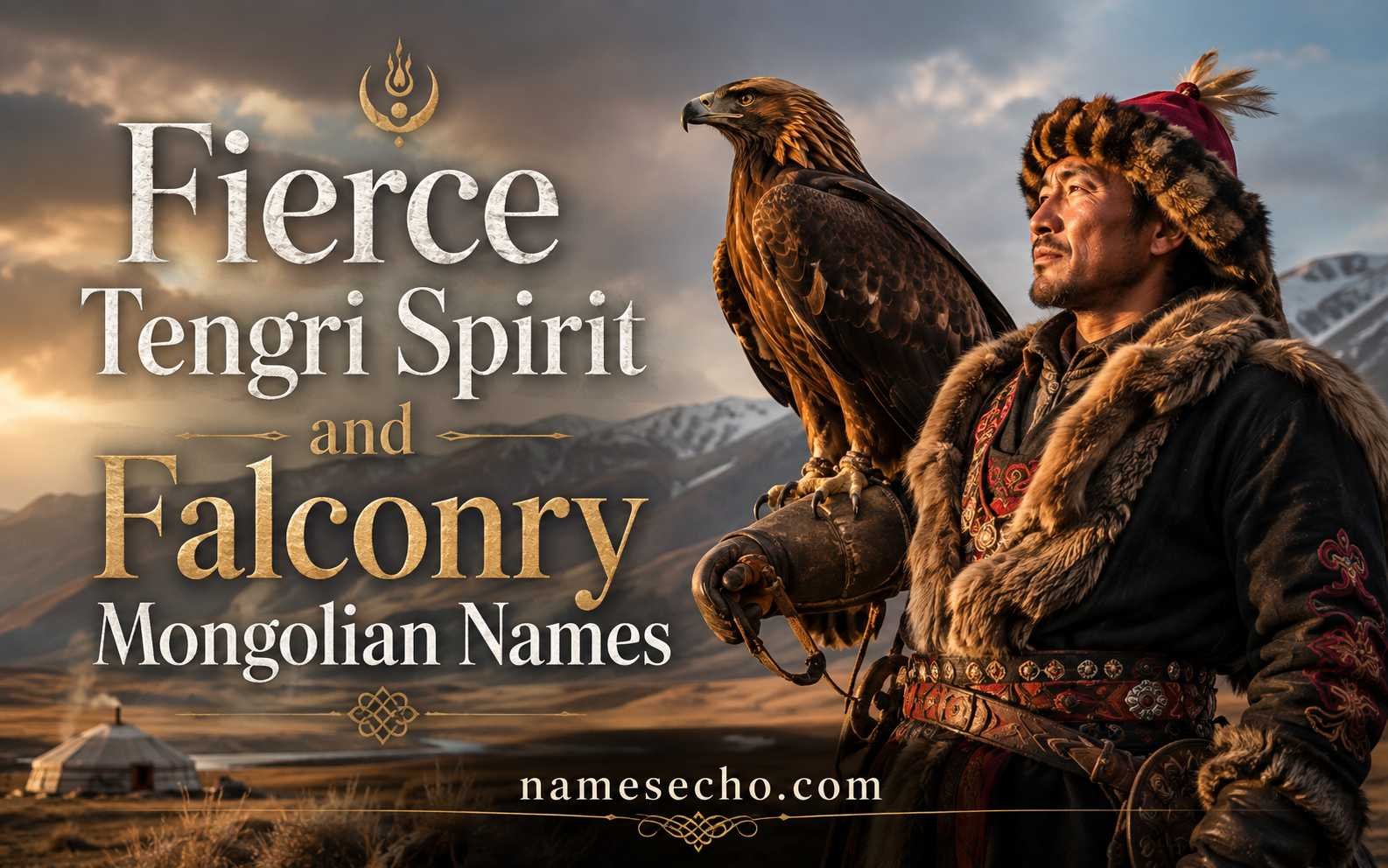
Tengri, the sky god at the center of traditional Mongolian shamanism and Tengrism, still shapes names and cultural identity today. Related to this spiritual tradition, western Mongolia’s Kazakh minority in the Bayan-Ölgii region is internationally known for its centuries-old golden eagle hunting practice, a detail worth knowing even though eagle hunting itself is a distinct Kazakh, not ethnic Mongolian, tradition within Mongolia’s borders.
Tengri, Khukh Tenger, Buurel (grey, often associated with wisdom), Shonkhor (falcon), Bürged (eagle), Khartsaga (hawk), Sar Tengri (moon spirit), Naran Tengri (sun spirit), Tenger-Ochir, Buyandelger, Ariunbold, Tengist.
Strong Inner Mongolia and Ordos-Style Mongolian Names
Inner Mongolia is an autonomous region of China with a large ethnic Mongolian population, and its naming traditions, including those from the Ordos region, overlap heavily with names used in Mongolia itself while sometimes reflecting closer contact with Chinese naming conventions.
Ordos, Bayan, Sechen, Wangchug, Sereng, Namjil, Dugarsuren, Buyanbat, Tsedendamba, Norovbanzad, Chinges, Genden, Suren, Damrin, Tuvshin.
Special Instructions for Mongolian Name
A few practical notes before settling on a final choice from any of these Mongolian names.
Check how the name is transliterated, since Mongolia uses a Cyrillic alphabet today while Inner Mongolia still uses traditional vertical Mongolian script, and spellings can vary noticeably between sources depending on which system was used. Confirm the meaning of each root word separately if you are combining two names yourself, since Mongolian names are built compositionally and an unintended combination can carry an odd or even unflattering meaning.
Keep the historical taboo in mind if you are researching royal or ancestral names specifically, since naming a child after a past ruler was traditionally considered inappropriate. If pronunciation matters for daily use, say the full name aloud, since some combined Mongolian names that read smoothly can be genuinely difficult for non-Mongolian speakers to pronounce correctly.
FAQs
Do Mongolians have surnames like Western names?
Not historically. Surnames were banned from 1924 to the mid-1990s, and Mongolia only reintroduced clan surnames, called ovog, starting in 1997.
What does the name Genghis Khan actually mean?
Genghis Khan was born Temüjin. His title, Chinggis Khaan, is still debated among historians, though it is widely associated with strength and supreme rule.
Are Mongolian names usually unisex?
Some are, including Tsolmon, but most Mongolian names lean specifically masculine or feminine based on their root words and traditional usage.
Do Mongolians actually name their horses?
No, traditionally Mongolian herders identify horses by color, markings, and brands rather than individual names, since horses are described using hundreds of specific color and pattern terms instead.
Why do some older Mongolian names sound unpleasant?
Some Mongolian parents historically chose unattractive sounding names on purpose, believing it would mislead evil spirits into leaving the child alone.
Conclusion
Mongolian names carry more history in a single word than most naming traditions manage in an entire family tree, from golden ornaments and moonlight to the literal titles once held by history’s most famous conquerors. If you are choosing one for a child, a character, or simply out of curiosity, take the time to look up what each root word actually means rather than picking based on sound alone. That extra step is exactly what turns a good Mongolian name into one with a real story behind it.

I am researcher and content writer with over four years of experience exploring the meanings, origins, and cultural significance of names from around the world. I specialize in creating well-researched, accurate, and easy-to-understand content that helps readers discover the perfect names for babies, businesses, pets, characters, and more. Every article is carefully crafted to provide trustworthy information and practical guidance for visitors.
1 thought on “480+ Mongolian Names: Unique, Traditional & Modern”